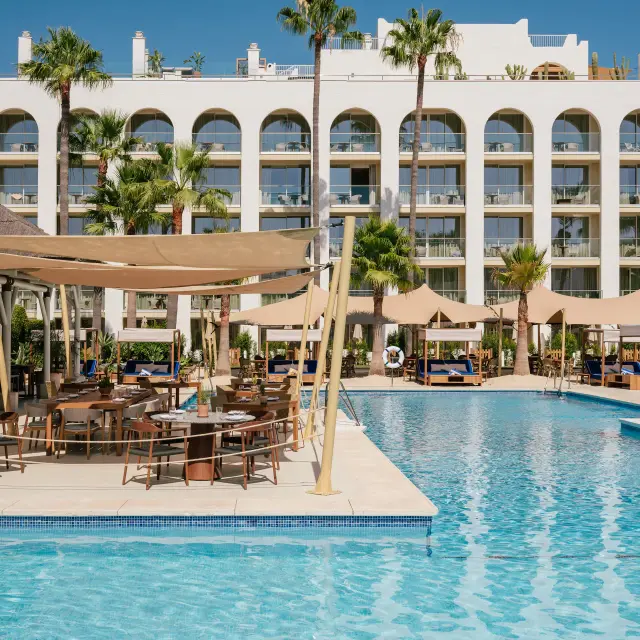
ME Marbella: A Beach-Club Hotel in the Heart of the Costa del Sol
Marbella has spent the last sixty years building a particular kind of reputation: one that involves yachts the size of small islands moored in Puerto Banús, Lamborghinis idling outside boutiques, and a clientele that includes Saudi royalty, Russian billionaires, and a parade of European footballers. This is all real, and it is all still there. You can still book a table at Nobu in the Puente Romano, you can still walk past a hundred-foot Sunseeker in the marina, and you can still see a flamingo-pink Bentley nosing its way down the Golden Mile.
What is also true, and what gets less press, is that Marbella has another side. A quieter, older, prettier side. An old town of whitewashed houses, tiny pedestrian streets, terracotta pots heavy with geraniums, and tapas bars that have been pouring vermut since the 1950s. There are dramatic limestone mountains pressed up against the coastline, a coastal walk that runs for ten kilometres along the sea, and some of the best Andalusian cooking outside of Seville.
The trick to enjoying Marbella, I think, is to stay somewhere that lets you have both. Somewhere that gives you the resort experience (the pool, the cocktails, the DJ at sunset) without locking you into the over-the-top side of it. ME Marbella (opens in new tab) does this, and it does it well.
Where Marbella Sits
A bit of geography first, because it matters. Marbella is roughly an hour west of Málaga along the AP-7 motorway, sitting between the Sierra Blanca mountains and the Mediterranean. The town stretches along about twenty-six kilometres of coastline, and what most people call "Marbella" is actually three distinct areas.
There is the old town (the casco antiguo), which is the small, atmospheric, walkable historic centre. There is the modern town that has grown up around it, with the Avenida del Mar and the marina. And there is the Golden Mile, a stretch of coastline running west toward Puerto Banús, lined with luxury hotels, beach clubs, and gated villas. Each of these has its own character, and a good Marbella trip uses all three.
ME Marbella sits between them, which is geographically clever. It is close enough to the old town for an easy taxi or a long walk, near enough to Puerto Banús for an evening of fine dining and people-watching, and on its own grounds with the kind of pool and beach setup that means you don't have to leave if you don't want to.
Arriving at the Hotel
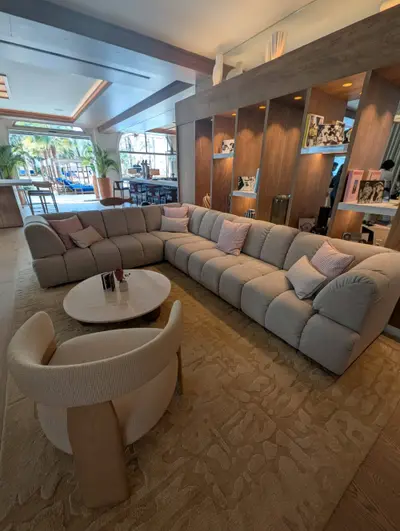
The first impression is intentional. You walk into the lobby and the soft house music greets you before the staff do, low enough to be background, present enough to set the tone. There are linen-upholstered sofas, ceramics, plants, a pool of light coming through the open architecture. It feels like walking into a beach club in Ibiza, but a calmer one that is warming up for the afternoon rather than already three hours into it.
Photography: Natasha L. Hardy/The Uncommon Traveller
This is the ME design language at full volume. The brand sits within the Meliá portfolio and operates at the intersection of hospitality and design, and ME Marbella leans further into the resort end of that spectrum than its sister property in Málaga does. Where ME Málaga is a city hotel, embedded in cobblestoned streets and pedestrian squares, ME Marbella is a beach-club hotel, with a pool deck that is unapologetically the centre of gravity.
The hotel was recently renovated, which shows. The finishes are crisp, the rooms feel new, and the property has the kind of freshness that you only get in the first year or two after a serious refit.
The Rooms
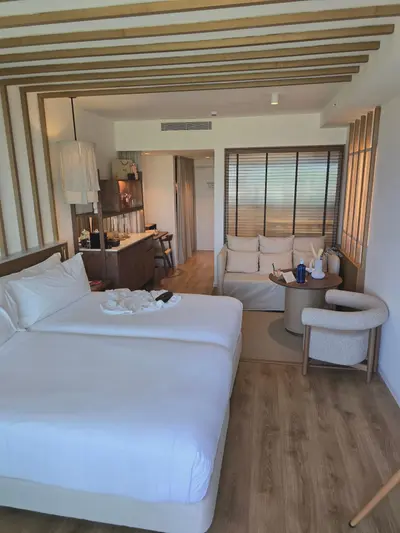
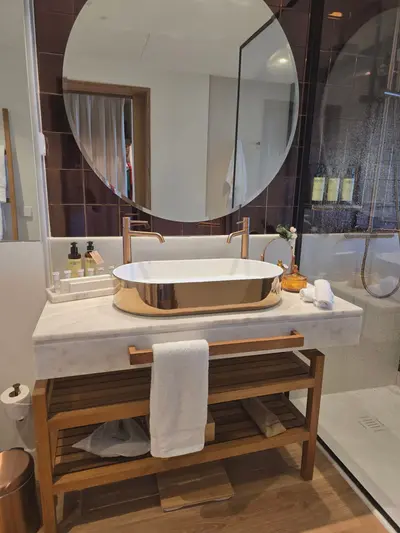
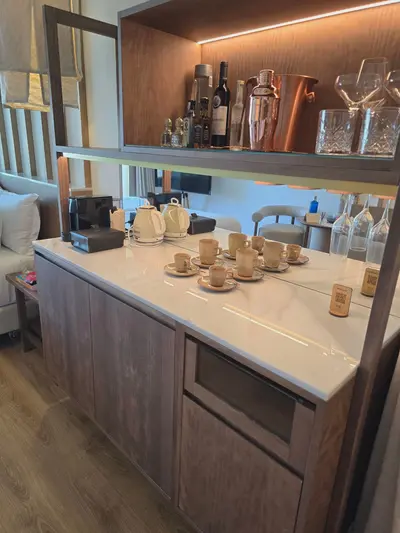
The rooms at ME Marbella share a design DNA with ME Málaga (opens in new tab). The same calm beige base, the same wood and teak furniture, the same linen curtains and bed linens, the same emphasis on sustainable amenities (refillable toiletries, glass water bottles, very little plastic in sight). The one big difference is the ceilings. The Rafa García paintings that are the signature of every ME Málaga room are not here. ME Marbella has its own visual identity, more Mediterranean, more resort, less gallery.
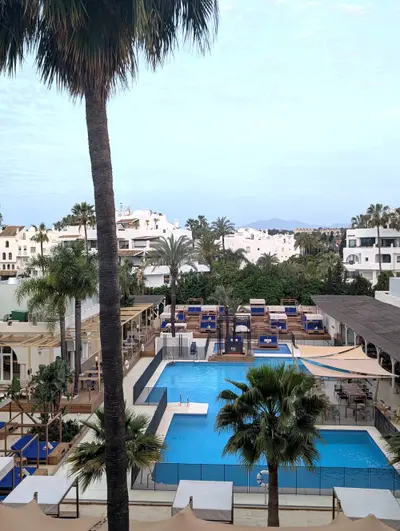
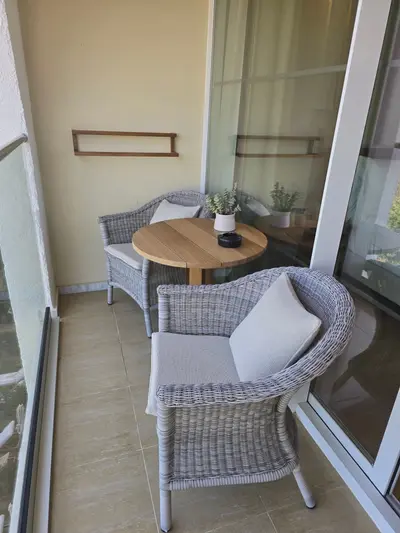
My room had a balcony overlooking the pool, and this is the upgrade I would push for if I were booking. In the early morning, before anyone is up, you can sit out there with a coffee and hear the birds. The grounds back onto a river that runs down to the sea, and the soundscape is greener than you'd expect this close to a major resort coast. There is a sofa and a plush armchair in the sitting area, comfortable enough to actually use rather than just look at. On arrival, there was a plate of locas (a local Málaga pastry, soft and lightly almond-flavoured) with fresh fruit on the side, which is exactly the kind of small touch that costs almost nothing and makes a guest remember a property.
Photography: Mirjam Shah
A practical note worth flagging. On one of the nights of my stay, there was a DJ playing by the pool, and I could hear it from my room. The music ran until around 21:30 to 22:00, which I personally didn't think was excessive. I had brought ear plugs, and they did the job. If you are particularly noise-sensitive, ask for a room on the side of the property facing away from the pool, or check whether your dates overlap with any scheduled events. This is a hotel that occasionally turns into a party, and that is part of what it is. Going in expecting that is the difference between a great stay and a disappointing one.
The Pool
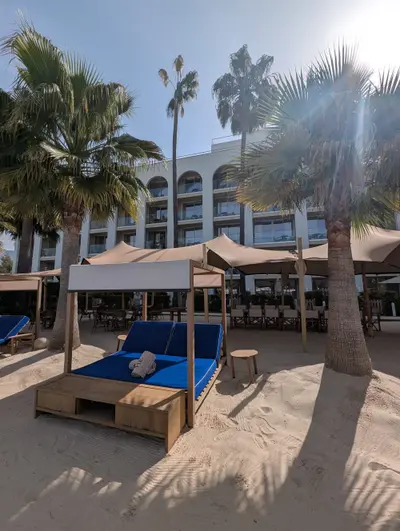
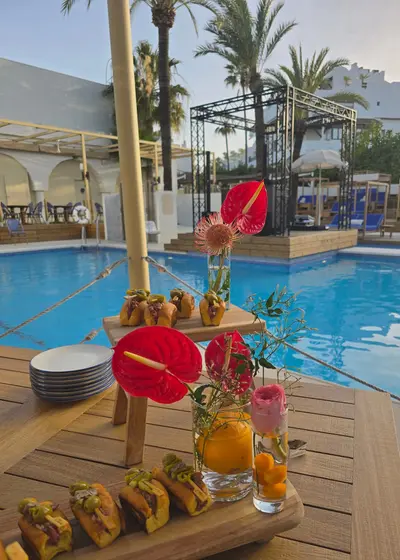
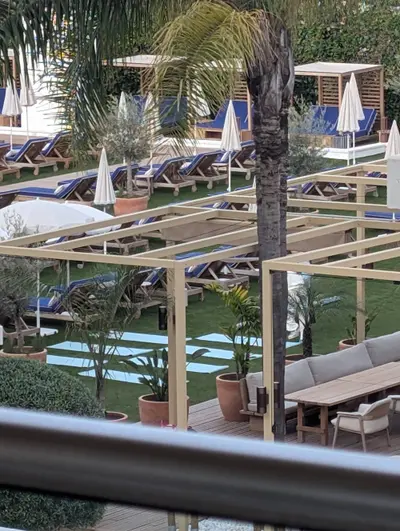
The pool deck is the property's argument, in the same way that the rooftop is the argument at ME Málaga. There is a vast number of loungers and daybeds, some of them set in the pool itself (a quietly genius design move that turns the shallow end into a kind of social space). The loungers around the perimeter sit on actual sand rather than tiles or decking, which gives the whole space the feeling of a beach club without making you walk to the beach. You can spend a full day here without getting bored. I did.
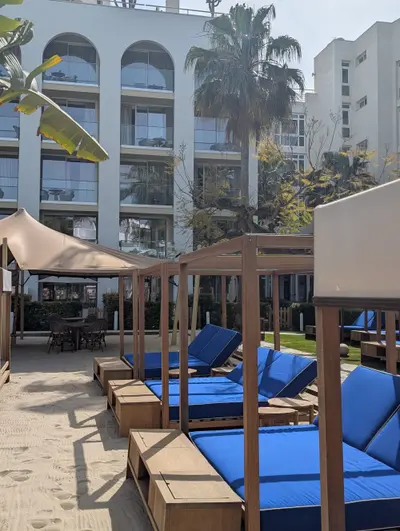
Photography: Natasha L. Hardy / Mirjam Shah
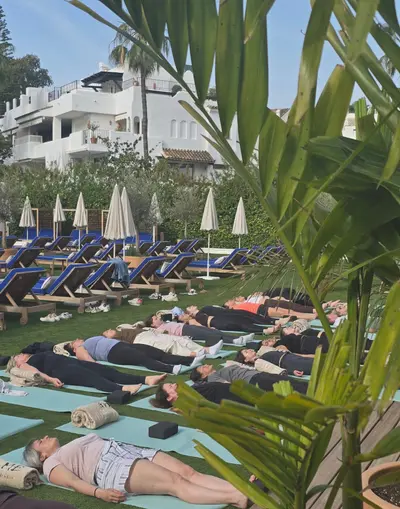
There is a yoga programme that runs from the grassy area beside the main pool. I joined a class one morning, with calypso music playing softly and the day still cool, and it was lovely. Straight after, there was a facial yoga class, which sounds slightly absurd and was, in fact, half ridiculous and half deeply relaxing. (You make a lot of strange faces. The instructor takes it seriously. You leave with cheekbones you didn't know you had.) These wellness sessions are the kind of thing that makes a resort feel like a resort rather than just a hotel with a pool.
Breakfast
Breakfast is served in a large, light-filled restaurant with a buffet that quietly takes Andalusia seriously. There are stations dedicated to local produce: pan con tomate (the simplest and best of Spanish breakfasts, toasted bread rubbed with raw tomato and good olive oil), copious amounts of Andalusian olive oil to drizzle on everything, a station with freshly sliced jamón ibérico de bellota (the proper acorn-fed kind, the only kind worth eating), and Spanish cheeses laid out by region.
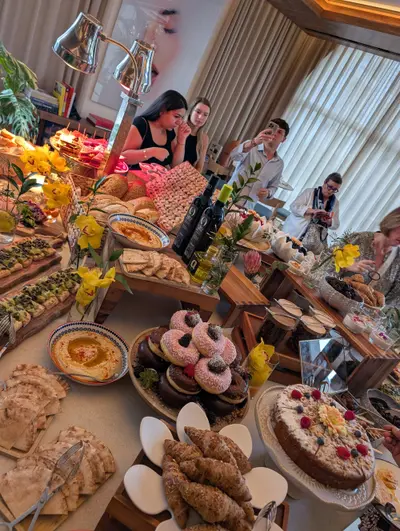

Photography: Natasha L. Hardy/The Uncommon Traveller
Beyond the buffet, there is an à la carte menu that includes eggs Benedict, tortilla española done properly (still slightly soft in the middle, which is how it should be), and a small list of more elaborate plates. Fresh juices, espresso, fresh honey dripping from a gigantic honeycomb, cava if you want bubbles in the morning. It is a serious breakfast, and on a long lazy stay, it sets up the rest of the day.
When booking ME Marbella with us, you will automatically get the following perks added to your stay - at no extra cost:
- Daily breakfast for two per room
- $100 USD hotel credit (once per stay), subject to a 3-nights minimum length of stay
- VIP welcome amenities
- Guaranteed early check-in at 10 a.m. OR late check-out at 4 p.m. at the time of reservation
- 20% extra MeliaRewards points per Suite or Villa booking.
- Priority for requested room category, bed type, rollaway beds, and connecting rooms
Old Town Marbella
A fifteen-minute taxi from the hotel and you are in Casco Antiguo, the old town, which is where Marbella's other personality lives. This is the part of the city that existed before the jet set arrived in the 1960s, and it has been carefully preserved.
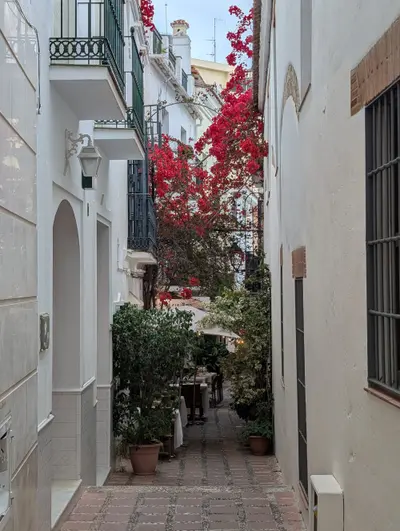
The streets are tiny and pedestrian-only, paved in marble cobbles, lined with whitewashed houses whose walls drip with bougainvillea and geraniums. House numbers and street signs are hand-painted on ceramic tiles. Shops sell espadrilles (the traditional rope-soled canvas shoes), embroidered linens, hand-thrown ceramics, and the small green bottles of olive oil that are pressed in the mountain villages just behind the town. There are art galleries (some good, some less so), small jewellery workshops, and bars that have been in the same family for three generations.
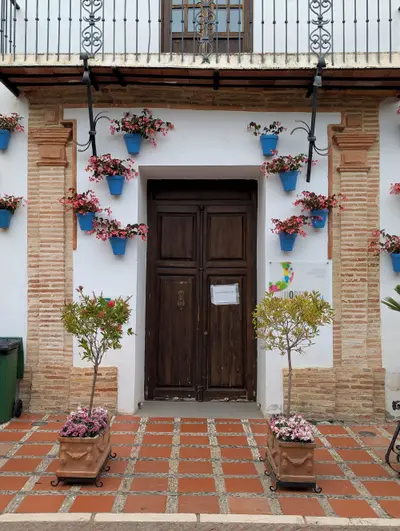
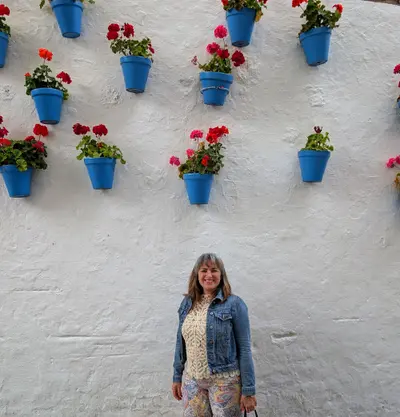
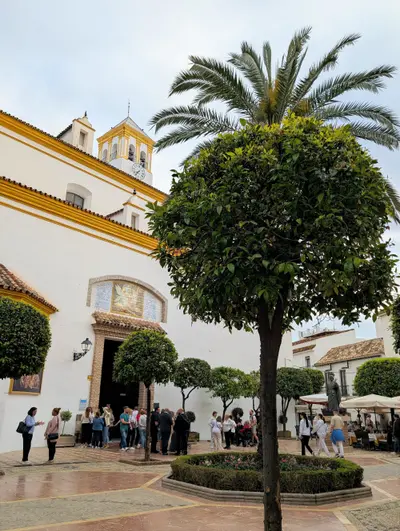
Photography: Natasha L. Hardy/The Uncommon Traveller
The heart of the old town is the Plaza de los Naranjos, the orange tree square, which is exactly what it sounds like. A square of orange trees in bloom, surrounded by tapas bars, with the sixteenth-century town hall on one side and a small chapel on the other. Sit at one of the tables, order a vermut and a plate of berenjenas con miel (aubergines fried and drizzled with sugar cane syrup, a Málaga speciality), and you have done Marbella correctly.
For dinner in the old town, try Casa Eladio for honest, traditional Andalusian cooking. For something more contemporary, Kava is small, design-led, and serves the best wine list in the casco antiguo. The Iglesia de la Encarnación, the church on the edge of the old town, is worth a walk-through. Built in the sixteenth century on the foundations of a former mosque, it is the kind of layered Spanish history you find on every other corner here.
Puerto Banús and the Golden Mile
Puerto Banús
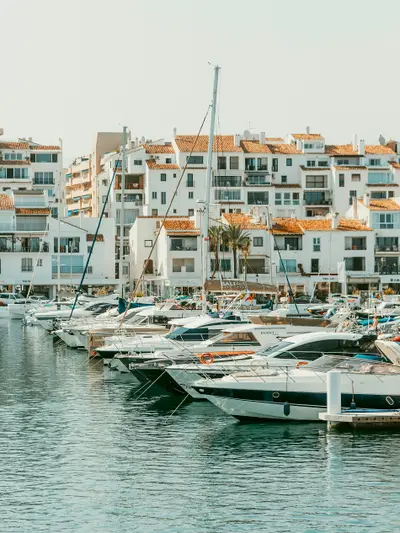
A short drive west of the hotel and you are in Puerto Banús, the marina that put Marbella on the map of international wealth in the 1970s. This is the headline version of the Costa del Sol: yachts, designer flagships, valets, and a slightly improbable energy. It is also genuinely fun for a night out, if you go in with the right spirit. Walk the marina at sunset, eat dinner at Cipriani or Trocadero Arena (both classics), and have a drink at Sky Lounge for the view back across to Marbella.
The Golden Mile Beach Clubs
The Golden Mile, the stretch of coast between Marbella and Puerto Banús, is where the famous beach clubs sit. Nikki Beach, Trocadero Playa, La Sala by the Sea. These are day-into-night affairs where you book a daybed, eat lunch, swim, and drift into evening cocktails. Not subtle, and not for everyone, but for the traveller who wants that energy, the best of them are in this one stretch.
If you want to walk between Marbella and Puerto Banús, the Senda Litoral is a coastal boardwalk that runs the length of the city. It is one of the best urban walks on the Mediterranean.
Day Trips from Marbella
Marbella's location is a quiet superpower. Several of Andalusia's most extraordinary places are within reach for a day, and a week split between hotel days and day trips is the best way to see this part of Spain.
Ronda
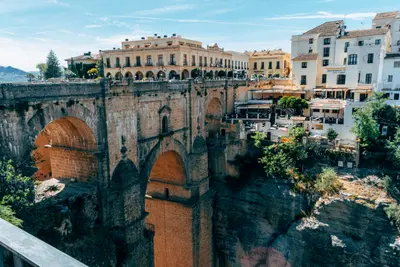
Ronda is an hour and a half north, up into the mountains. The town sits on either side of a hundred-metre-deep gorge, the Tajo, with the Puente Nuevo bridge spanning the chasm in eighteenth-century stone. It is the spiritual home of Spanish bullfighting (the Plaza de Toros is the oldest in the country), and the cliff-edge views are some of the most photographed in Spain. Have lunch at Bardal if you can get a reservation, or at Tragatá (Bardal's casual sister) if you can't.
Granada and the Alhambra
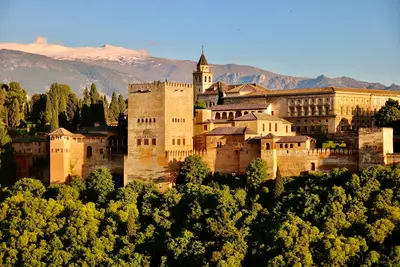
Granada and the Alhambra are about two hours away by car. The Moorish palace complex that crowns the city is one of those places that genuinely lives up to the hype. Book the Nasrid Palaces in advance, ideally a month or more out, especially in high season.
Caminito del Rey
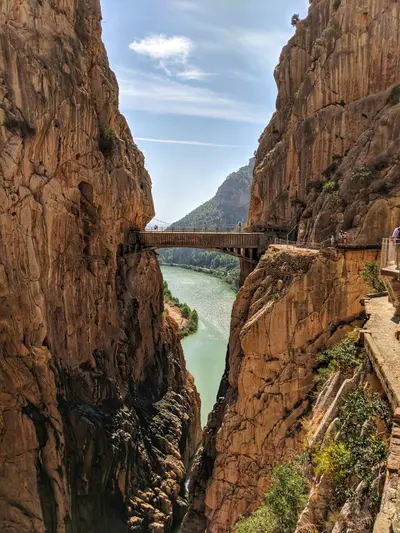
The Caminito del Rey is an hour and a half north, a wooden boardwalk pinned to the side of a vertical gorge, suspended a hundred metres above the Guadalhorce river. The original "King's Little Path" was famously dangerous for decades. It has now been completely rebuilt and is one of the most spectacular walks in Europe. Book in advance and go early to beat the heat.
Seville
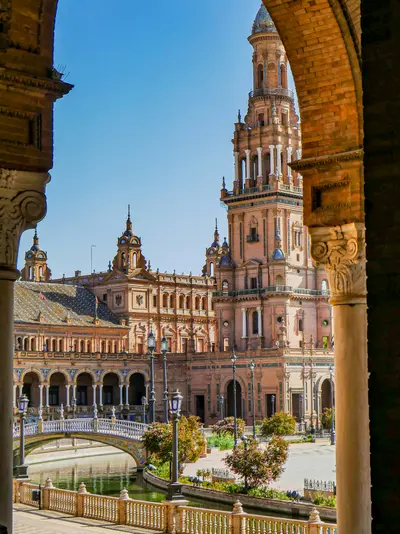
Seville is the longest of the day trips, about two and a half hours away, and is best done as an overnight. The Real Alcázar, the Cathedral, the Giralda, dinner in Triana, and flamenco at one of the smaller peñas where the dancing is for locals.
How Long to Stay at ME Marbella
Three nights at ME Marbella is enough to enjoy the property. Five is better, if you want to fold in a couple of day trips. Seven is the sweet spot, especially in the shoulder seasons (May, June, late September, October), when the weather is warm but the town is quieter than mid-summer.
This is a property for travellers who want resort comforts without committing to the full all-inclusive resort experience. It is good for couples, for friends travelling in pairs, for honeymooners who want a beach-club energy without the crowds of Ibiza. Families with older children would do well here. Families with very young children might prefer ME Málaga, which is more child-friendly and easier to navigate. Solo travellers will find it easy to enjoy a long lunch by the pool with a book.
What it is not is a serene retreat. The property has energy. There is music in the lobby, there are events by the pool, and the clientele tilts toward the social end of the spectrum. If you want monastic silence, this is not your hotel. If you want to lie on a daybed in the sand with a vermut and a novel, and then walk into the old town for dinner, this is exactly your hotel.
Final Thoughts
Marbella is a city that gets reduced, in most travel writing, to one of two clichés. Either the playground of the international super-rich, or the place to avoid because of the playground of the international super-rich. The truth is neither. Marbella is a small, beautiful Andalusian town with a complicated relationship to its own success, and the trick to loving it is staying somewhere that lets you see all of it.
ME Marbella does this. The pool is excellent, the rooms are quietly luxurious, and the location lets you reach everything that matters. Pair it with a few nights in Málaga, and you have one of the best weeks in Spain. Add Ronda, the Caminito del Rey, and a day in Granada, and you have a trip you will be talking about for years.
Bring a book. Buy yourself some espadrilles. Save room for the pan con tomate.
For more luxury hotel offers in Spain, Europe and beyond, visit our website.

Natasha L. Hardy
Luxury travel advisor and concierge based in Utrecht, Netherlands. Independent affiliate of Fora Travel (Virtuoso). Lived in 7 countries, travelled to close to 70. Speaks English, Portuguese, Spanish, and Dutch.
Read more →

